
Procedural generation in games, explained in plain words
Procedural generation means that a game builds content from rules and random numbers, instead of a designer who places every piece by hand. A seed is the number that starts the process. The same seed with the same rules always gives the same result.
The idea in one example
You must make a forest for a game. A level designer can place every tree by hand. That takes a long time, and the forest is the same for every player.
With procedural generation, the designer writes rules instead:
- Put trees on grass, not on roads or in water.
- Keep a small gap between trees.
- Put more trees near rivers and fewer trees near towns.
Then the computer applies the rules with random numbers. Each time, you get a new forest that still makes sense.
How it works, step by step
- The game gets a seed. The game can choose it at random, or the player can type one.
- A random number generator turns the seed into a long list of numbers. The list looks random, but it is always the same for the same seed.
- The rules of the game use those numbers to make choices. For example, the numbers decide where a road goes or what loot is in a building.
- The game checks the result. A good generator rejects or fixes a layout that breaks the rules, such as an exit that the player cannot reach.
The computer does not "invent" anything. It only follows the rules. So the quality of a generated world depends on the quality of the rules.
What a seed is
A seed is a start value for the generator. Because the generator follows fixed steps, the same seed gives the same output.
Minecraft is a well-known example. The game picks a seed at random, or you can type your own. The same seed generates the same terrain every time. In the Java Edition, the /seed command shows the seed of your world.
Seeds do not always control everything. In RimWorld, a given seed always gives the same land masses, rivers, and mountains. But roads and faction towns can change between two worlds with the same seed.
A short history
- Rogue (around 1980): Michael Toy and Glenn Wichman made it for Unix computers. Its dungeon levels, monsters, and treasure were generated again for each game, and death was permanent. The "roguelike" genre has its name from this game.
- Elite (1984): David Braben and Ian Bell had very little memory on 8-bit computers. So the game generated eight galaxies with 256 planets each from one seed number. It did not need extra memory to store the details of each planet.
- Spelunky (2008): Derek Yu made a game with procedurally generated caves, so each run is different.
- Minecraft (2011): the world is generated as players explore it, from a seed.
- No Man's Sky (2016): this game by Hello Games generates over 18 quintillion planets from a single seed. The result is the same for everyone, so two players who visit the same planet see the same place.
What games generate
- Terrain and maps: hills, rivers, forests, and roads.
- Levels: dungeons, caves, and building layouts.
- Loot: which items are where, and sometimes their stats.
- Events: encounters, weather, and random choices.
Many games mix hand-made content with generated content. For example, designers can build rooms or buildings by hand, and the generator decides where to put them. This gives the world variety, and the quality of each piece stays high.
The pros
- Replay value. A new world each time means that you cannot remember the map. You must read it again.
- Small file size. As Elite shows, rules take much less space than a stored world.
- Surprise. Even the developers do not know every world that their game can make.
- Your own story. Two players can have very different trips, so they have more to share.
The cons
- Sameness. If the rules are too simple, every world feels like a copy of the last one.
- Bad layouts. A generator can make a place that is too hard, too easy, or broken. Developers must test many seeds to find these problems.
- Weaker story moments. A designer can control a hand-made scene better than a generated one.
- Harder balance. When the map changes, it is harder to tune the difficulty.
How Route 48 uses procedural generation
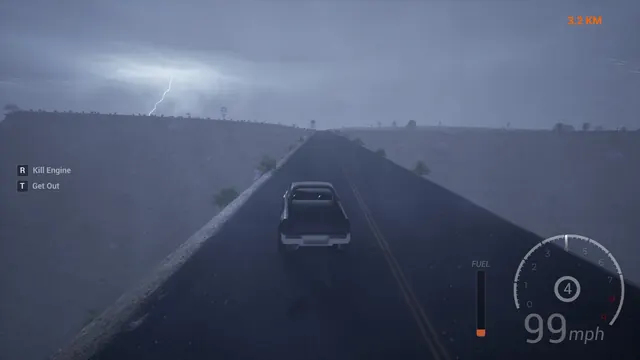
Route 48 is our game, so we can explain its approach. Every new game generates a new world with different roads, towns, forests, loot locations, and encounters. So you cannot learn one route. You must read the road each time and decide when to stop for fuel and parts.
Route 48 is in Early Access, and player feedback will shape the procedural generation. If a world feels wrong, players can tell us in the Route 48 discussions on Steam.
How to read "procedurally generated" on a store page
- Find out what the game generates: the whole map, or only the loot.
- Check if the game has seeds, if you want to share a world with a friend.
- Look for hand-made content, such as story missions, on top of the generated world.
- Watch videos from different players to see how much their worlds differ.
Want to try some of these games? See our list of the best procedurally generated survival games. For a road trip with random events, see games like Death Road to Canada.